
Prostate cancer > Treatment options for prostate cancer that has spread or recurred
Recurrence
Almost inevitably, cancers that initially respond to the above hormonal treatments eventually begin to grow again (the diagram above explains why this happens). This stage of prostate cancer is often referred to as hormone-relapsed prostate cancer.
If you reach this stage, your doctor may recommend one of the following treatment options:
- modifying existing hormonal therapy by adding or withdrawing anti-androgen
- cytotoxic chemotherapy (drugs that destroy the cancer cells)
- hormone therapy (this is different from that discussed earlier)
- another form of treatment that aims to prevent substances in the body from stimulating further growth of the cancer.
Bisphosphonates Since prostate cancer frequently spreads to the bone, a class of drugs known as bisphosphonates, which act to stabilize the skeleton and reduce bone loss, may be helpful. A recent study has demonstrated that Zometa (zoledronic acid) administered by intravenous infusion every 3 weeks can delay the development of skeletal problems, such as fracture, by up to 5 months. Side effects of this treatment are relatively minor; some patients develop a flu-like illness during the infusion but this is usually short-lived. More and more men with advanced prostate cancer are now being offered this treatment option and studies are underway to determine whether bisphosphonates may even prevent metastases in the bone developing in the first place.
Cytotoxic chemotherapy Cytotoxic chemotherapy is an option, but the drugs used can have unpleasant side effects, such as sickness and hair loss. Increasingly effective chemotherapy drugs are now available, so if your doctor discusses this with you, ask what side effects you might expect and whether it is possible to counter them effectively. Oncologists rather than urologists are experts in this area.
So what is the point of these drugs? It is possible that chemotherapy might give you an extra few months or even years, and if the side effects are minimal or can be overcome, you might feel that this option is worthwhile. New drugs, such as Taxotere (docetaxel), have recently been shown to improve survival rates. Taxotere given every 3 weeks may result in a sharp reduction in PSA values as well as an improvement in quality of life. Side effects include nausea, vomiting, hair loss and a reduction in the white cell count in the blood known as leucopenia - your urologist and oncologist will be able to discuss the latest treatments with you and organize treatment in an oncology centre.
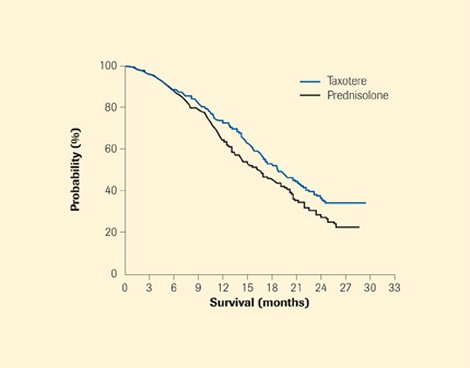 |
| A recent study has shown that patients given Taxotere (docetaxel) every 3 weeks survive for longer. |
Hormone treatment Oestrogens, female hormones, may offer some benefit at this stage of your disease. They appear to be able to reduce stimulation of cancer growth and they may also damage the cancer cells directly. The reason that oestrogens are not used in earlier disease is that they can have some potentially serious side effects, such as nausea, blood clots and other cardiovascular complications, such as heart attacks or even strokes. Many doctors advise that you take a low dose of aspirin (75 mg) if you take oestrogen-based drugs to help overcome the potential cardiovascular side effects. Oestrogens should not be used if you have previously had problems with either blood clots or heart failure.
Other treatments There are a number of what are called ‘growth factors’ in the body that stimulate the progression of prostate cancer. Blocking the action of these growth factors should potentially block their stimulatory effects on the cancer. However, the drugs that are being developed with this aim are very new and are still under investigation. Angiogenesis inhibitors inhibit the growth of a new blood supply to provide oxygen and nutrients to the cancer cells, and immunotherapy holds some promise. Again, though, if you do eventually reach this stage, knowledge of the effects of these drugs may then be such that your doctor is able to prescribe them for you.
Palliative care Palliative care aims to provide you with support to make you feel comfortable and composed in the final stages of the illness. Over recent years, considerable progress has been made in this area, and medical opinion now holds that no patient needs to feel the pain or discomfort that was characteristic of the last stages of cancer in bygone years. If your cancer progresses to this stage, you will usually be assigned a palliative care team - specialist doctors and nurses who have considerable expertise and experience in this area, and who will support you and your family. You will have opportunities to talk to members of the team about your care, and you should discuss any medical, social or financial worries that you have.
Patients with very advanced prostate cancer tend to experience bone pain, and you may be given strong and effective painkillers to help overcome this. In addition, you might have radiotherapy (either as a short course or a one off). Another effective method of alleviating bone pain is with injections of a radioactive substance known as strontium. If you are offered radiotherapy, make sure that you know whether it is likely to result in other side effects, such as nausea and vomiting, so that you can weigh up the advantages and disadvantages in the light of all the facts and your own circumstances. In this situation, the first consideration of the medical team should be to preserve your dignity and help your family and friends to support you, ideally in your own home.